

Table of Contents
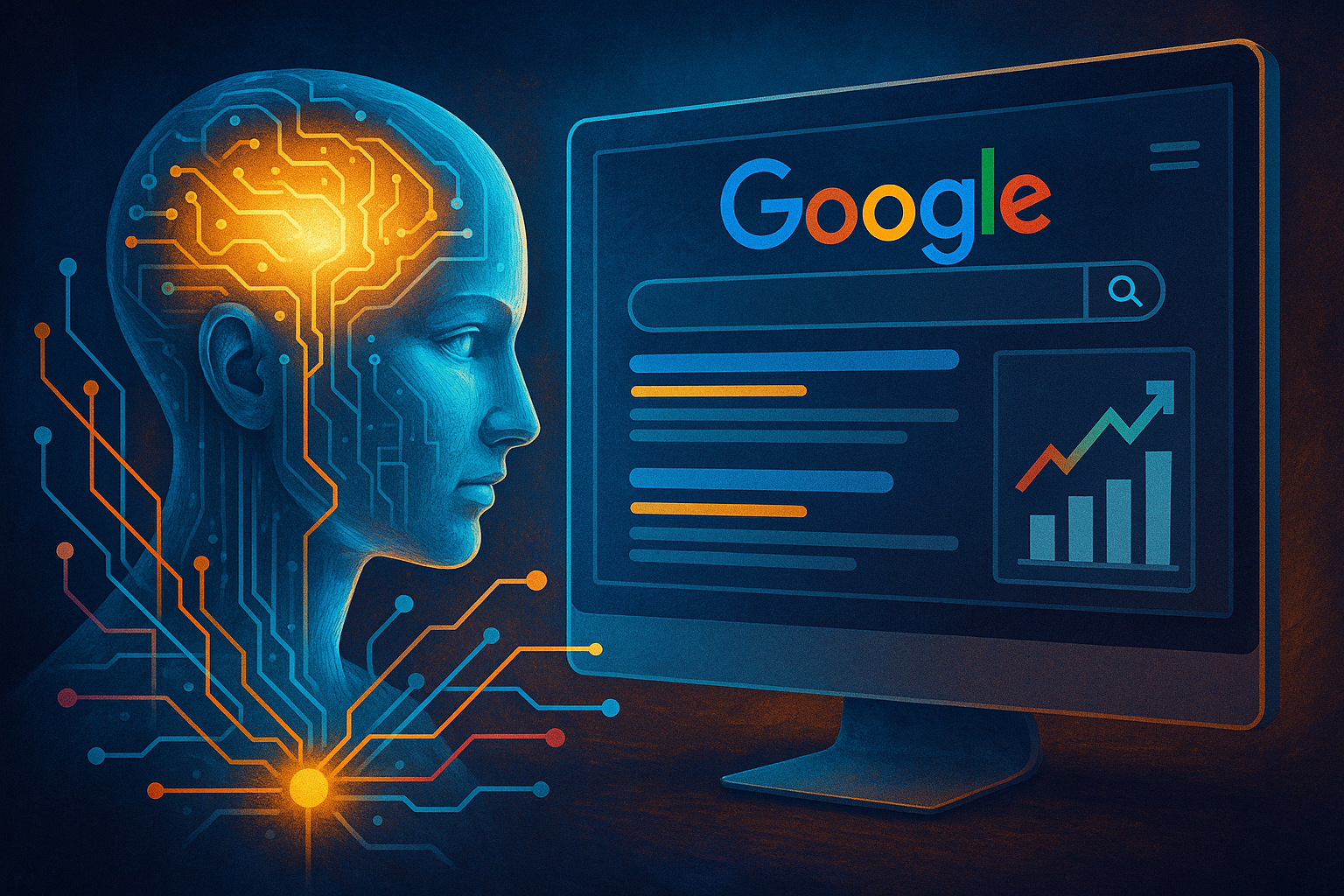
Artificial intelligence (AI) is transforming how Google ranks and displays search results. From smarter algorithms to AI-powered summaries, the search experience is evolving rapidly. Google’s goal is simple — provide faster, more relevant, and context-aware results that match user intent.
This shift, often referred to as AI search ranking, marks a major step in search evolution. Understanding how it works helps website owners, SEO professionals, and digital marketers adapt their strategies to stay visible in 2025 and beyond.
What Is AI Search Ranking?
AI search ranking means Google uses artificial intelligence systems to understand and rank web pages more effectively.
Traditional algorithms relied on backlinks and keywords. Now, AI systems like RankBrain, BERT, and the Search Generative Experience (SGE) help Google interpret meaning, context, and user intent — not just words.
Core AI Systems in Google Search
AI Model | Function | Impact on Search |
RankBrain | Understands query intent | Smarter query results |
BERT | Analyzes context of words | Better understanding of long-tail searches |
MUM | Multimodal model for text, image, and video | Unified content understanding |
SGE | Generates AI-powered overviews | Instant, conversational answers |
How AI Is Changing Google Search Results
1. Smarter Understanding of Search Intent
Google’s AI no longer just reads text — it interprets meaning. Whether users type, speak, or even upload an image, AI understands what they really want.
Example: If you search “best laptops for developers”, Google now shows content that considers performance, budget, and use case, not just product names.
This shift encourages brands to focus on intent-based SEO, writing content that genuinely answers user needs.
2. AI-Powered Overviews (Search Generative Experience)
Google’s Search Generative Experience (SGE) is one of the biggest changes in 2024–2025. It uses AI to summarize key information right inside the search results.
For instance, a query like “How AI affects SEO ranking” might show an AI-generated summary before listing traditional links.
While this improves user experience, it also means:
- Less click-through for generic content
- Higher visibility for authoritative and original insights
👉 Tip: Add unique value beyond what SGE summaries show — include expert opinions, stats, and comparisons.
3. Visual and Multimodal Search Expansion
With Google Lens and MUM, users can search using images, videos, and even combined queries. AI connects different content types, showing relevant pages, products, and media in one place.
This means visual SEO and schema optimization are now vital. Websites that use structured data, alt text, and clear multimedia signals have a stronger chance to rank in AI-driven results.
4. Personalized and Predictive Results
AI makes search results more personalized based on browsing history, preferences, and location.
For example:
- Two people searching “restaurants near me” may see entirely different results.
- Frequent tech readers might get more AI or SEO news articles at the top of their feed.
This personalization means SEO strategies must prioritize user experience (UX), engagement metrics, and trust signals like E-E-A-T (Experience, Expertise, Authoritativeness, and Trustworthiness).
5. Shifts in Click Behavior and SERP Layout
AI is redesigning the look of Google results:
- More “zero-click searches” through AI snippets and summaries
- Dynamic carousels, images, and video highlights
- Deeper integration of Google Discover and News feeds
Brands that diversify visibility across these surfaces — not just blue links — will gain more impressions. Focus on brand presence and multi-format content.
What It Means for SEO in 2025
AI isn’t replacing SEO; it’s redefining it.
Search is becoming a conversation, not just a list of links.
To stay competitive in the AI-driven search landscape:
- Write for humans first, not algorithms.
- Use structured data for better AI understanding.
- Publish authoritative, original content that adds unique insights.
- Optimize for E-E-A-T — expertise and credibility matter more than ever.
- Focus on topical authority — cover subjects comprehensively within your niche.
Example: AI and SEO Synergy
SEO Area | AI Influence | Best Practice |
Keyword Optimization | Semantic search replaces exact match | Use natural phrasing and related terms |
Content Relevance | Context and intent dominate | Write for people, not bots |
Ranking Factors | Behavior metrics impact ranking | Improve time-on-page and engagement |
Technical SEO | Schema helps AI crawl smarter | Add structured data and page clarity |
Challenges of AI Search
While AI improves accuracy, it also brings challenges:
- Reduced organic traffic from AI overviews
- Greater competition for fewer visible spots
- Content duplication issues from generative summaries
SEO professionals must monitor Google’s evolving updates and adapt fast to maintain strong rankings.
Benefits of AI in Search
Despite challenges, AI offers clear benefits:
- More relevant search results
- Better understanding of niche content
- Fairer ranking for high-quality websites
- Enhanced multilingual and multimodal capabilities
AI ultimately helps good content rank better — rewarding transparency, value, and expertise.
Future of AI Search Ranking
AI search ranking will continue evolving. Google is already testing longer conversations, predictive queries, and interactive SERPs.
In the near future:
- Search could answer multi-step questions instantly.
- Google will highlight verified experts and trusted publishers.
- Voice and visual search will play a larger role in traffic generation.
This future rewards publishers who combine authority, user trust, and clarity — three pillars of sustainable visibility.
FAQ: People Also Ask
AI helps Google understand content meaning, not just keywords. It improves ranking accuracy by analyzing user intent, quality, and engagement signals.
SGE is Google’s AI system that summarizes answers directly in search results, giving users quick insights before showing traditional links.
No. AI changes how SEO works but doesn’t replace it. Content quality, relevance, and authority still play a major role.
Use structured data, improve content depth, enhance E-E-A-T signals, and focus on user intent rather than keyword density.
They’re searches where users get answers directly on Google — often from AI summaries — without visiting any site.
Conclusion
AI is reshaping how Google understands, ranks, and displays content. From intent-driven results to AI summaries, search is becoming faster, smarter, and more intuitive.
For content creators and marketers, success now depends on clarity, authority, and adaptability. By producing human-centered, trustworthy information, you can stay visible even as algorithms evolve.
At GK News Magazine, we believe the future of search belongs to those who understand both technology and human behavior — and write content that connects the two.
 Romi Patel