

Table of Contents
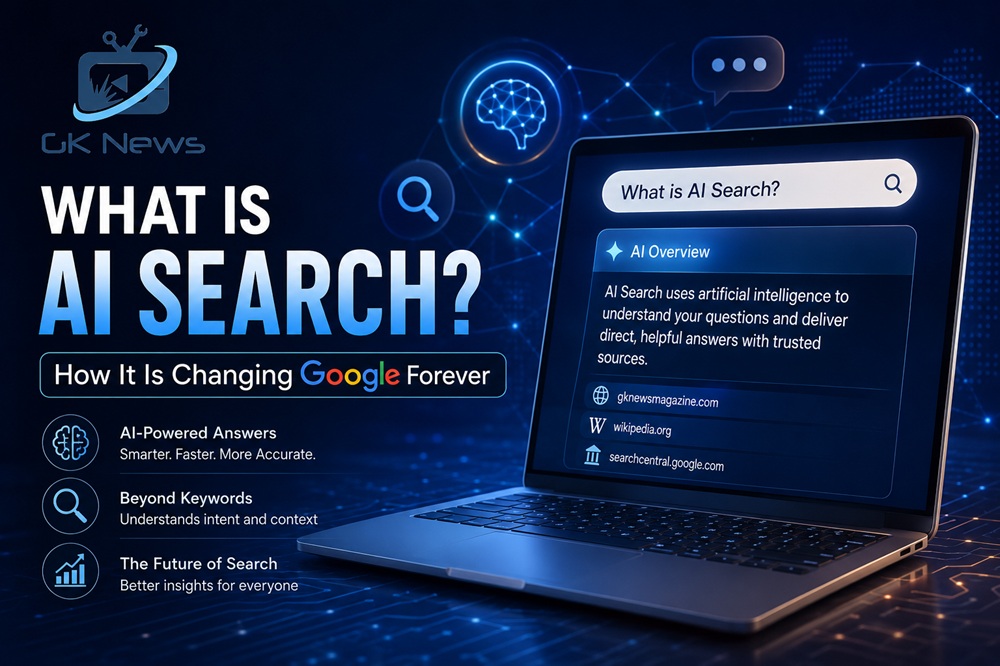
People no longer search online the same way they did a few years ago. Instead of clicking through several websites, many users now expect direct, complete answers within seconds. This shift has led to the rise of AI Search, where artificial intelligence understands questions, analyzes information from multiple trusted sources, and provides clear answers.
Google has introduced AI powered search experiences such as AI Overviews to help users find information faster. This change is reshaping how websites earn visibility and how businesses create content. Instead of focusing only on rankings, websites now need to become trusted sources that AI systems can understand and reference.
If you own a website, work in digital marketing, or simply want to understand the future of search, learning about AI Search has become essential.
What Is AI Search?
AI Search is a search technology that uses artificial intelligence, machine learning, and large language models to understand the meaning behind a user’s question instead of matching only keywords.
Traditional search engines mainly showed a list of web pages based on keywords. AI Search goes further by understanding context, intent, and relationships between topics before generating an answer.
For example:
Traditional Search
Search: Best laptop for college students
Google returns a list of websites.
AI Search
Search: I need a lightweight laptop under ₹70,000 for engineering students with long battery life.
AI understands every requirement and provides a summarized answer while citing useful sources.
This creates a faster and more personalized search experience.
How Does AI Search Work?
AI Search combines several advanced technologies to understand and answer questions.
| Technology | Purpose |
| Natural Language Processing | Understands human language and intent |
| Machine Learning | Learns from search behavior and improves results |
| Large Language Models | Generates detailed, natural language answers |
| Knowledge Graph | Connects related people, places, products, and topics |
| Semantic Search | Understands meaning instead of exact keywords |
Instead of matching only words, AI Search tries to understand what users actually want.
How Google Search Has Changed
Google Search has evolved significantly over the years.
| Year | Major Change |
| Early Search | Keyword matching |
| 2013 | Better understanding through semantic search |
| 2019 | Improved language understanding with BERT |
| 2022 | Helpful Content System focused on people first content |
| 2024 onwards | AI Overviews and generative search experiences |
Google now focuses on delivering helpful, reliable, and people first content instead of simply rewarding pages with the highest keyword density.
What Makes AI Search Different from Traditional Search?
| Traditional Search | AI Search |
| Matches keywords | Understands meaning |
| Shows ten blue links | Gives direct answers |
| User visits many websites | User often gets answers immediately |
| Limited context | Understands conversation |
| Focus on keywords | Focus on intent and relevance |
This shift changes how people interact with search engines every day.
Why AI Search Matters
AI Search benefits both users and businesses.
For Users
- Faster answers
- Better understanding of complex topics
- More conversational searches
- Less time spent opening multiple websites
- Better recommendations based on context
For Businesses
- Greater importance of topical authority
- Higher demand for trustworthy content
- Better opportunities for brands with expertise
- Increased visibility through AI generated answers
AI Search Is Changing SEO
SEO is not disappearing. Instead, it is evolving.
Modern SEO focuses on creating content that both humans and AI systems can understand.
Today, successful content should include:
- Original insights
- Clear headings
- Helpful examples
- Accurate facts
- Strong topical authority
- Well organized structure
- Natural language
Google also emphasizes Experience, Expertise, Authoritativeness, and Trustworthiness when evaluating helpful content.
Many SEO professionals now also focus on:
- Answer Engine Optimization (AEO)
- AI Overview Optimization (AIO)
- Generative Engine Optimization (GEO)
These approaches help content become part of AI generated answers instead of only ranking in traditional search results.
Statistics That Show the Growth of AI Search
Several industry reports highlight how quickly AI powered search is growing.
- Google processes billions of searches every day.
- AI powered search experiences continue to expand across many countries.
- More users now ask conversational questions instead of typing short keyword phrases.
- Businesses are increasingly optimizing content for AI generated answers alongside traditional SEO.
This trend shows that AI Search is becoming a permanent part of the digital landscape.
How to Optimize Your Website for AI Search
If you want your content to remain visible, focus on quality instead of shortcuts.
Create Helpful Content
Write content that answers real user questions completely.
Build Topic Authority
Cover related topics in depth rather than publishing isolated articles.
Use Simple Language
Clear writing helps both readers and AI systems understand your content.
Add Structured Content
Use:
- Tables
- Bullet points
- FAQs
- Step by step guides
These formats improve readability and make information easier to extract.
Keep Content Updated
AI systems prefer accurate and current information.
Earn Trust
Support claims with reliable sources and real experience.
Google recommends creating content primarily for people instead of trying to manipulate rankings.
Will AI Search Replace Traditional Google Search?
Not completely.
Traditional search results will continue to exist because many users still want to compare different websites before making decisions.
However, AI generated summaries will increasingly appear at the top of search results for informational queries.
For website owners, this means creating content that deserves to become one of the trusted sources behind those summaries.
Frequently Asked Questions
AI Search uses artificial intelligence to understand user intent and provide direct, conversational answers instead of only showing a list of web pages.
Google Search now includes AI powered features, but traditional search still exists. AI Search focuses more on understanding context and generating complete answers.
No. It changes SEO. Websites still need optimization, but content quality, expertise, and authority have become more important than keyword repetition.
Google AI Overview is an AI generated summary that appears for many search queries. It combines information from multiple trusted sources to answer questions quickly.
Create original, people first content, answer common questions, organize information clearly, and demonstrate expertise.
Final Thoughts
AI Search is changing how people find information online. Instead of rewarding pages that simply target keywords, modern search systems value useful, trustworthy, and well structured content. Businesses, publishers, and creators who focus on helping users will have the best chance of earning visibility in both traditional search results and AI generated answers.
As AI continues to reshape Google Search, building topical authority and publishing reliable content will become more important than ever. At GK News Magazine, we continue to share practical insights on AI, SEO, technology, and digital trends to help readers stay informed in this rapidly changing search landscape.